About MS Tank FRP Lining Services
Skip to content ChatGPT Log in You said: Discription for frp lining ChatGPT said: Hereas a professional description for FRP lining that you can use in technical documents, quotations, or project reports: FRP Lining a Description FRP (Fiberglass Reinforced Plastic) lining is a protective layer applied to surfaces such as concrete, steel, or other substrates to provide excellent resistance against corrosion, abrasion, and chemical attack. The lining consists of multiple layers of fiberglass mat or fabric impregnated with thermosetting resins such as polyester, vinyl ester, or epoxy, depending on the service conditions and chemical exposure. FRP lining forms a seamless, leak-proof, and highly durable surface that enhances the life of tanks, pipelines, floors, drains, and chemical storage structures. It is widely used in industries such as chemical processing, pharmaceuticals, water treatment, food processing, and marine environments. Key Features: Excellent chemical and corrosion resistance High mechanical strength and impact resistance Seamless and joint-free surface finish Lightweight yet durable Easy to maintain and repair Applicable to both new and existing surfaces Typical Applications: Chemical storage tanks and process vessels RCC and MS tanks Drainage channels and sumps Floor coatings in chemical and food industries
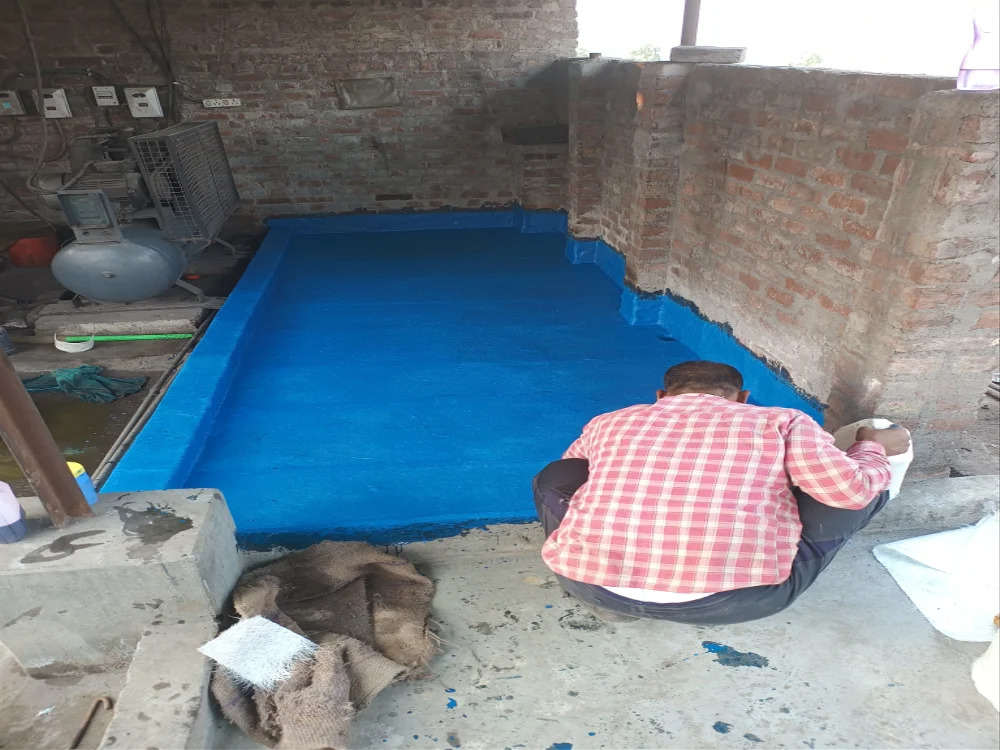
Comprehensive Tank ProtectionOur FRP lining solutions effectively shield MS tanks from corrosive damage caused by harsh chemicals. Engineered using fiberglass-reinforced plastic, the lining forms a strong, seamless barrier that maintains the structural integrity of your storage tanks, ensuring long-term reliability even in aggressive industrial environments.
Versatility Across IndustriesFrom chemical manufacturing to water treatment and food processing, our FRP lining services accommodate a diverse array of industrial needs. The exceptional chemical and temperature resistance makes our linings suitable for storing a wide variety of substances, safeguarding both tank infrastructure and stored materials.
Professional Application ProcessEach service begins with thorough surface preparation-either abrasive blasting or deep cleaning-to ensure optimal adhesion. Multiple FRP layers are then applied and cured over 24-48 hours based on ambient temperature and thickness. The end result is a leak-proof, glossy finish tailored to your application's requirements.
FAQ's of MS Tank FRP Lining Services:
Q: How is the FRP lining applied to MS tanks?
A: The FRP lining process starts with surface preparation, involving abrasive blasting or detailed cleaning to ensure a clean base. Fiberglass-reinforced plastic layers are then carefully applied, followed by a curing period of 24-48 hours, which depends on ambient temperature and the thickness of the layers.
Q: What are the main benefits of FRP lining for MS tanks?
A: FRP lining provides excellent chemical resistance, protects against corrosion, ensures a leak-proof surface, and extends the service life of MS tanks. Its smooth, glossy finish also makes cleaning and maintenance easier.
Q: Where are your FRP lining services typically used?
A: Our FRP lining services are commonly used in the chemical, pharmaceutical, water treatment, and food processing industries, wherever tanks require robust protection against corrosive or aggressive substances.
Q: What temperatures can FRP-lined tanks safely handle?
A: FRP-lined MS tanks can safely resist temperatures of up to approximately 100C, making them suitable for most industrial liquid storage applications.
Q: How long does the FRP lining process take?
A: Most FRP lining projects are completed within 3-7 days per tank. Curing of the lining itself requires 24-48 hours, depending on temperature and layer thickness, ensuring a durable, ready-to-use finish.
Q: What thickness options are available for FRP lining?
A: We offer FRP lining thicknesses ranging from 2 mm to 8 mm, tailored to the specific protection and durability requirements of each application.
 Send Inquiry


 Send Inquiry

 Send Inquiry